
When it comes to preparing for an Algebra 2 final exam, the hardest part is figuring out what actually needs to be reviewed. There’s a lot of content from the year, and trying to cover everything equally usually leads to rushed lessons, “tricks” that students don’t understand and overwhelmed students.
A better approach is to focus on the concepts that show up the most and connect across multiple topics. Even better if those concepts will be carried over into Pre-Calclulus and other future math courses!
If you’re also trying to figure out how to structure your review, you can start here.
The Key Topics to Focus On
Instead of thinking in terms of units, I believe that it helps to think in terms of the ideas that come up again and again.
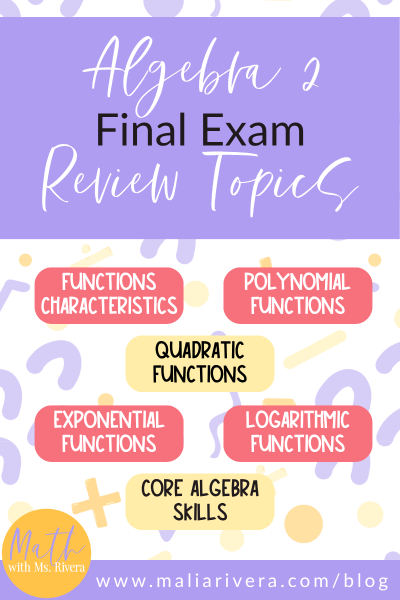
Key features of functions are at the center of almost everything in Algebra 2. Students should be comfortable interpreting graphs, connecting representations, and understanding how changes to an equation affect behavior. If this isn’t solid, it tends to show up in multiple places.
Quadratic and polynomial functions are another major area. Students need to move between solving, graphing, and interpreting these functions without relying on just one method.
Exponential and logarithmic functions are often less familiar, which makes them easier to forget. A short focused review here can help rebuild confidence, especially with solving equations and rewriting expressions that involve knowledge of their inverse features.
Finally, rational expressions and equations are worth revisiting as well, mostly because they require multiple steps and pulls from prior knowledge with a new application. When student struggle here, it’s often tied to gaps in foundational algebra skills.
Where Students Usually Struggle (and Why it Matters)
Sometimes the biggest issues aren’t with the newer topics. They’re with the skills that show up in every single unit.
Things like solving equations, working with transformations, and interpreting graphs tend to slow students down during a cumulative exam. Even if they understand the concept, gaps in these areas can make problems feel much harder than they actually are.
What You Can Spend Less Time On
Not every topic needs to have the same level of attention! Some areas, like probability and statistics or smaller units, can usually be reviewed more quickly. Especially if students performed well on them earlier in the year.
This doesn’t mean skipping them completely. It just means that we are going to be intentional with the time you have so you can focus more on what matters most.
How to Prioritize When Time Is Limited
If you only have a few class periods to review, focus on what will make the biggest impact. Start with the concept that connect across units, then pay attention to patterns in students mistakes and misconceptions. That’s where your time is best spent!
You don’t need to cover everything to run an effective review. You just need to focus on the right things to fit your students needs.
If you want help turning this into an actual plan, I walk through that step by step in this blog post here.
How Students Should Practice These Topics
Once you know what to review, the next step is deciding how students will practice.
Now, this is going to look different year to year. Students one year may find that they review best as a whole class. The next, students may prefer self checking independent review. So we’ll have to tailor the how based on current students needs.
The most effective review happens when students are working through mixed problems and deciding which strategy to use, not when they’re completing one unit at a time.
If you’re looking for specific activity ideas that support this, you can find those here.
Ready-to-Use Review Option
If you want to save time and make sure students are practicing the right mix of skills, using a structured review resource can make things so much easier!
A strong test prep resource pulls together the most important topics and gives students meaningful, mixed practice without you having to piece everything together yourself – you already have enough on your plate!
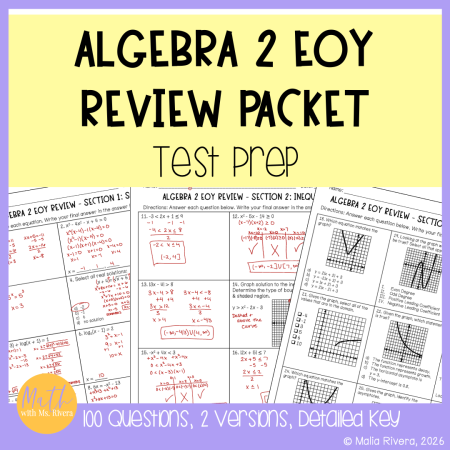
If you want something ready-to-use, you can check out my Algebra 2 test prep packet here.
Frequently Asked Questions
Q: What topics are most important for an Algebra 2 final exam?
Focus on function key features, quadratics, polynomials, exponential and logarithmic, and rational functions. These concepts appear most often and connect across multiple units.
Q: Should I focus more on certain units than others?
Yes! Prioritize topics that students struggled with and concepts that show up in multiple forms, rather than spending equal time on every unit.
Q: How do I know what my students actually need to review?
Use quick checks via warm-ups and exit tickets or mixed practice early in your review. Identify patterns and misconceptions in student mistakes. This will be where you focus your time and have strategic review.
Final Thoughts
Reviewing for an Algebra 2 final exam doesn’t have to feel overwhelming and stressful.
When you focus on the most important topics and use your time intentionally, your student review time becomes more effective and a lot more manageable!


One Response