Review weeks can feel like a mix of rushed lessons, random worksheets, and students asking, “Wait… we never learned that!” Cue the teacher eye roll…
The challenge isn’t just what to review. It’s how students are practicing!
The most effective algebra 2 review activities help students connect concepts across units, recognize different types of problems, and actually think through the math instead of regurgitating the steps.
If you’re still figuring out how to structure your review, start here!
What Makes a Review Activity Actually Effective?
Not all review is created equal.
Some activities simply keep students busy, but don’t prepare them for a cumulative exam.
In my opinion, the ones that work best tend to:
- mix multiple topics
- require students to choose a strategy
- give some form of feedback
If students only practice one skill set at a time, they’re not building the flexibility they need for long term retention, including test day.
Spiral Review – The Most Consistent Option
Spiral review is one of the easiest ways to build consistency during test prep season.
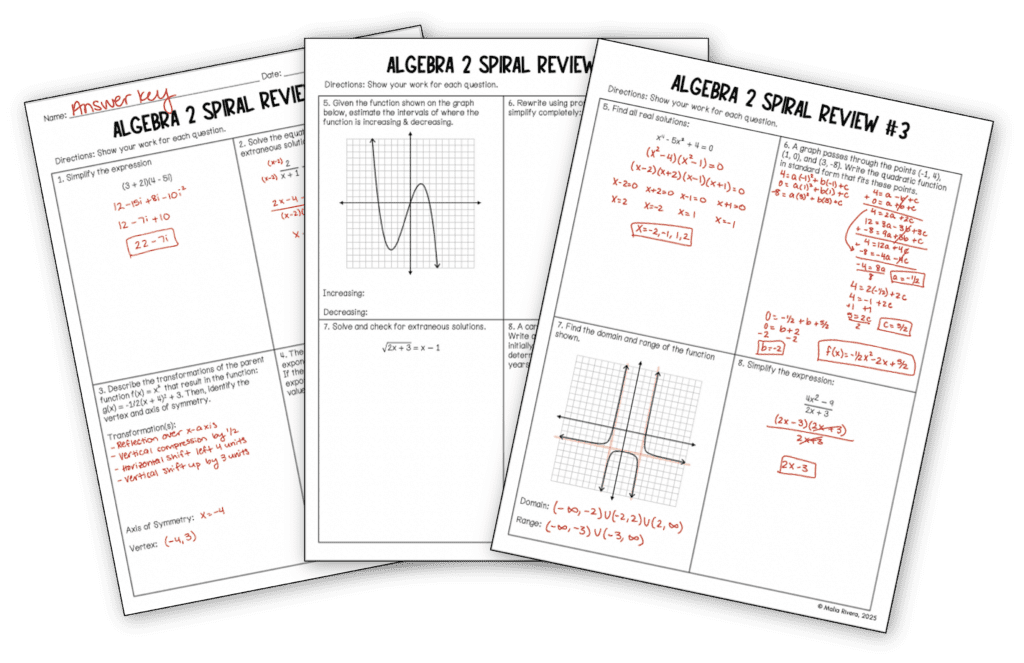
Instead of focusing on one topic at a time, students are constantly revisiting a mix of skills to keep them sharp. This helps them recognize problem types and switch between strategies more naturally.
This is exactly how I use my Spiral Review Worksheets throughout the end of year review season. Each set mixes topics so students are practicing multiple concepts at once without it feeling overwhelming and stressful.
Even short spiral review sets can make a big difference when you’re using them consistently during this time of year!
Mixed Practice That Feels Like the Test
A larger exam, like a state test or final exam, is very anxiety producing for many students. At some point, students need to experience what a cumulative test actually feels like. And I’m not talking about teaching to the test or test style at all!
That’s where mixed practice comes in.
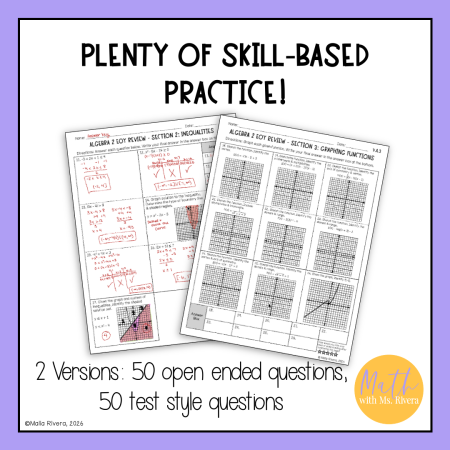
Instead of grouping problems by topic, students work through a variety of question types in one set. This forces them to decide which strategy to use, which is exactly what they’ll need to do on the exam.
A structured resource like my Test Prep Packet is designed for this. It combines multiple topics in a way that mirrors the exam question types, so students are practicing how to think, not just what to do.
Self Checking and Movement-Based Activities
Not every review day needs to look the same. Especially for high-schoolers, switching things up keeps things fresh and engaging!
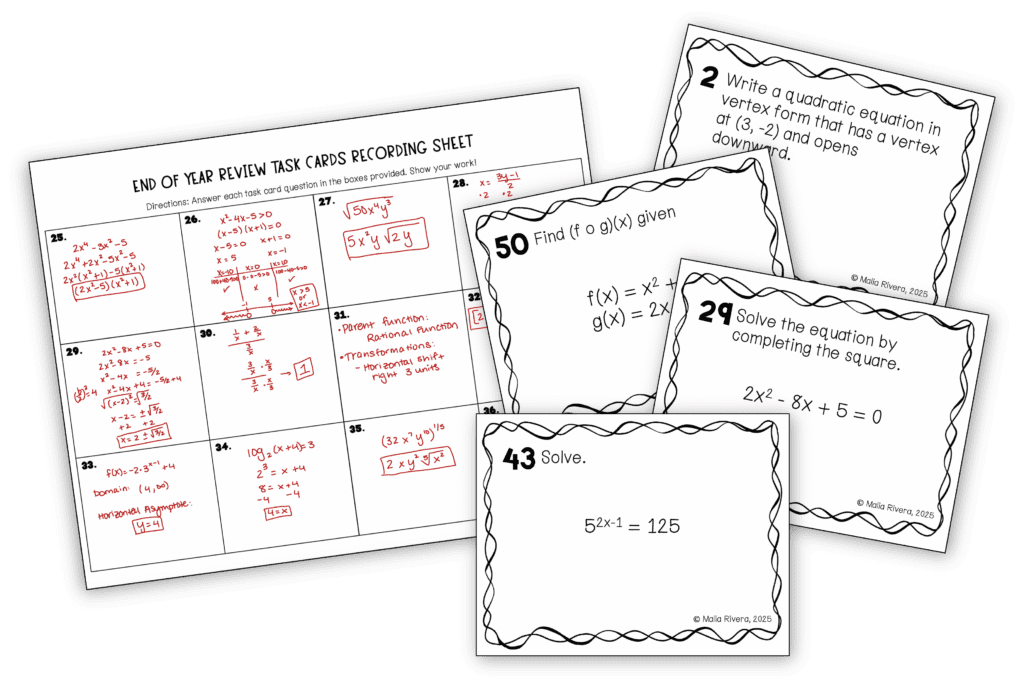
I know that many of my students, especially my post lunch classes need something more interactive to stay engaged. Task cards are a great option for engagement because they:
- get students moving
- break review into smaller chunks
- allow for partner or independent practice
I like using my End of Year Review Task Cards when I want students actively working through a variety of problems without sitting in one place the entire period.
These are especially helpful when energy is teenager energy is low but you still want meaningful practice happening!
Targeted Practice for Specific Skills
Once you start reviewing, patterns show up quickly! Especially with misconceptions students have…
You’ll notice certain topics where students need more support, and that’s where targeted practice becomes important.
Instead of reviewing everything again, you can focus on one skill at a time. I especially like to do this in small groups.
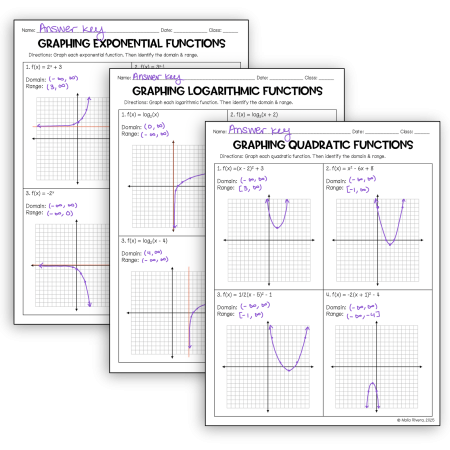
For example, if I notice a group of students are struggling with transformations, I’ll pull in something like my Graphing Transformations of Functions Review Packet to give them focused practice on that special concept. In the small group, we’ll talk through problems together before they continue on their own with my monitored support.
This is helping to reinforce understanding without slowing down the entire class.
Putting it All Together
The most effective review weeks don’t rely on just one type of activity. They combine:
- spiral review for consistency
- mixed practice for test readiness
- interactive activities for engagement
- targeted practice for addressing specific gaps
When these pieces work together, students get a much more complete review experience!
How to Keep Review From Feeling Repetitive
Even strong activities can start to feel repetitive if they’re used the same way every day. A few simple shifts can help! Try:
- rotating between activity types
- keeping tasks short and focused
- mixing independent and partner work
You don’t need a brand new plan for each day. You just need enough variety to keep students thinking!
Final Thoughts
Algebra 2 review doesn’t have to feel stressful for you or your students!
When students are working through mixed, meaningful practice, they’re more likely to stay engaged and actually retain what they’ve learned. Even past the test!
And honestly, it makes your review week run a lot smoother too.